Wild Moments Logo

The person behind WILD MOMENTS

Not just an animal keeper.
A father.

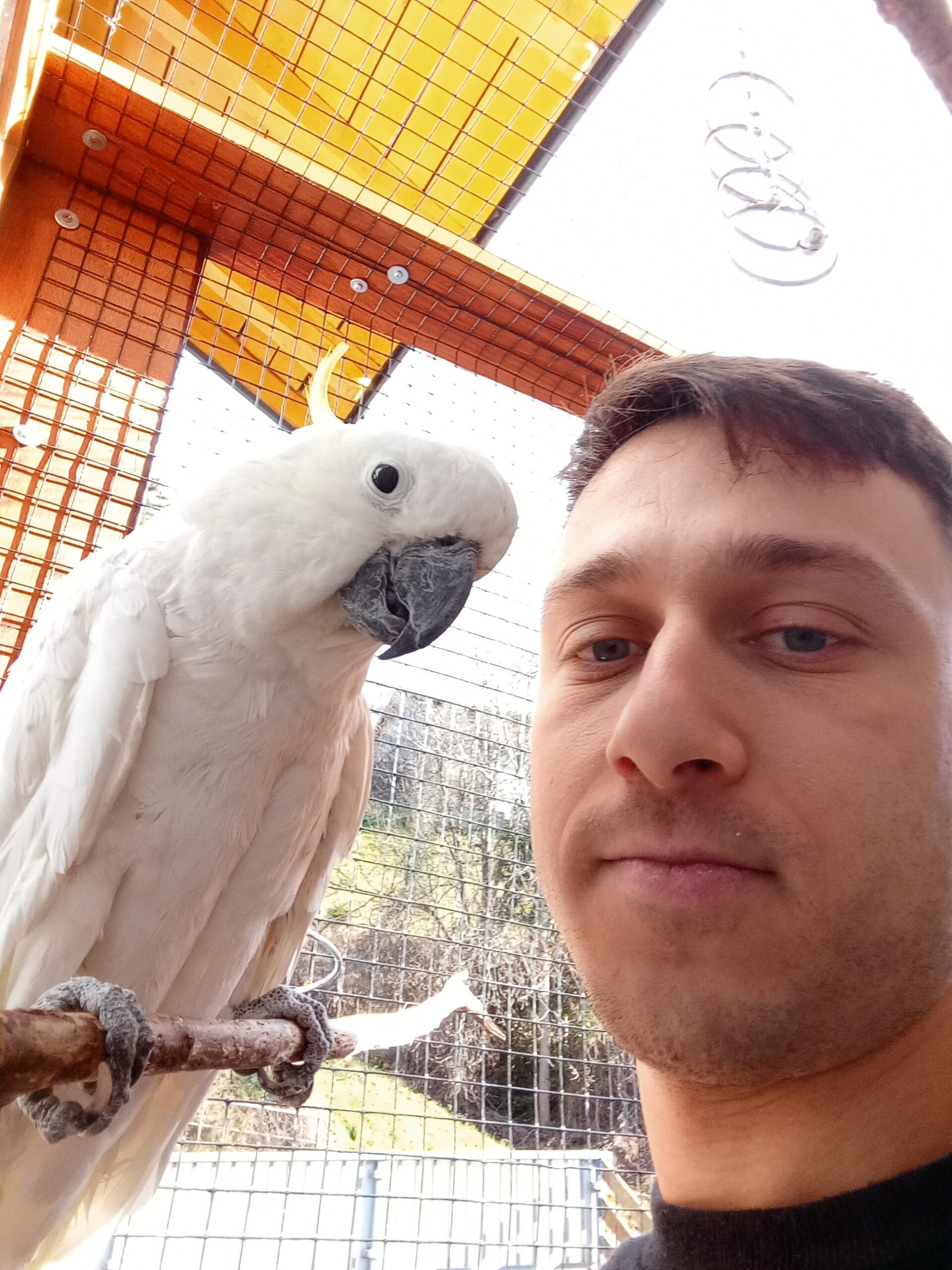
Beri Kirsh, born 1997 — from Israel, at home in Tyrol. The white winters and the deep green of summer: a landscape I never wanted to leave.


Many paths. One calling.

I have done many things: building pergolas, construction work, electrical systems for buses, working as a waiter. I enjoyed every one of these jobs. But none of them truly fulfilled me.

Then WILD arrived.

Not as a plan. Not as an idea. WILD came during one of the hardest phases of my life — and he is the reason I am still here today.


Why I do this.

Not for shows. Not for attractions. I created WILD MOMENTS because I witnessed too many cases: animals passed from hand to hand within weeks. People who were not truly ready to take responsibility. Animals who suffered because of it.

I want to prevent that from continuing — through real encounters that leave a lasting mark.

“There is no way I am getting a parrot at home anytime soon.”

— The most beautiful sentence I hear from guests. Again and again.


No circus. No performance. A real experience.

When I work with schools, hotels, or groups, I do not put on a show. WILD and Skippy might do a trick or two — but that is not the point. If you are looking for an attraction, hire a magician.

But if you want the people with you to have an experience they will carry for the rest of their lives — I am the right address.


My philosophy.

Live and let live. Animals have the right to exist as they were meant to — not as we want them to. That is why my parrots do not talk. If I wanted someone to talk to me, I would have chosen to live with humans.

I try to be with my animals 24 hours a day. Since 2017 I learn something new every day — no formal training, but over 8 years of lived experience.

People around me call me the parrot man. I am fine with that.

“Live and let live.”

Animals deserve the right to exist as they were meant to. Not as we imagine they should.

— Beri Kirsh


WILD & Skippy — my companions.
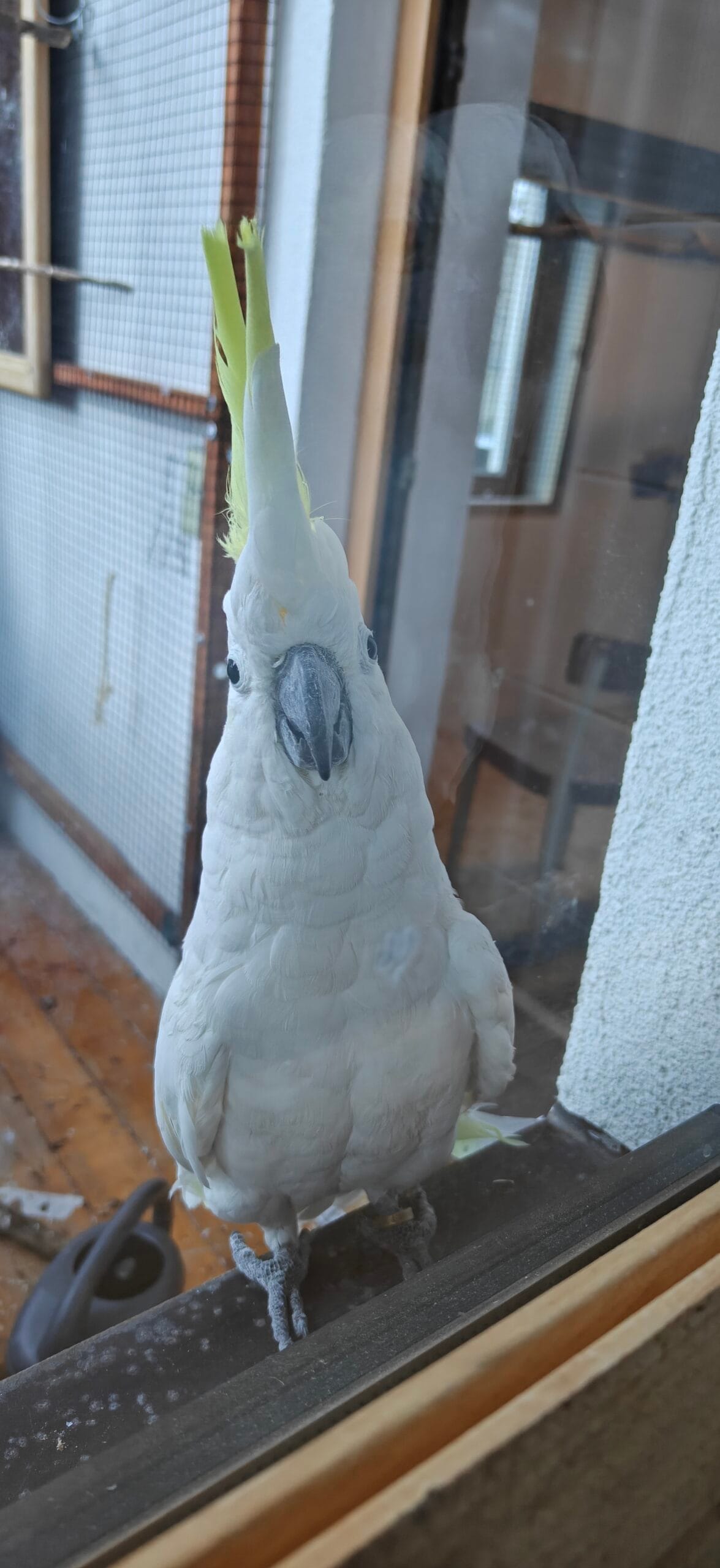
WILD — Sulphur-crested Cockatoo with raised crest
Beri Kirsh with WILD — Sulphur-crested Cockatoo, Tirol

WILD

“The reason I am still here today — my daily companion since the hardest days of my life.”

Sulphur-crested Cockatoo · with us since January 2021

Learn more about WILD →

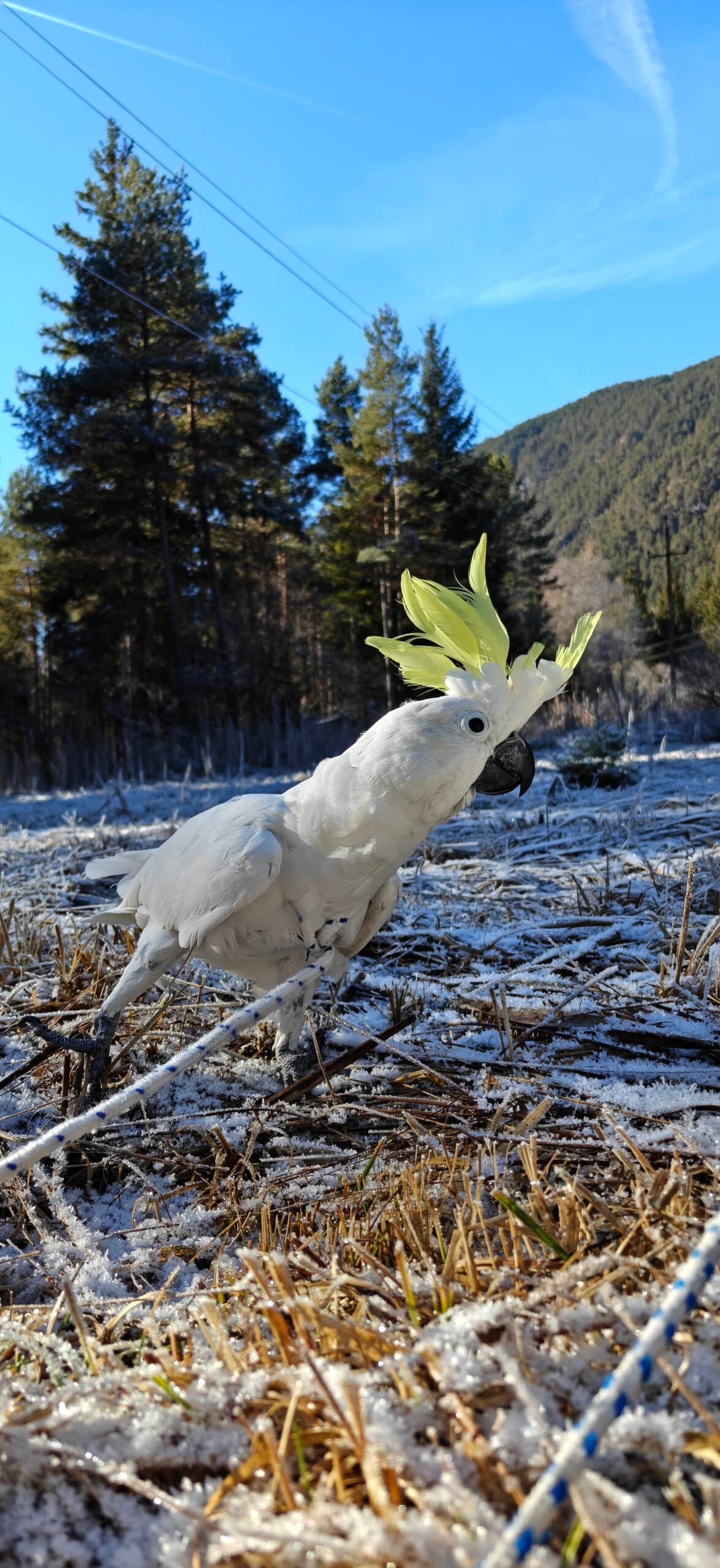
Skippy the Sulphur-crested Cockatoo in the Tyrolean winter snow

Skippy

“Curious, lively, unpredictable — Skippy brings fire to every encounter.”

Sulphur-crested Cockatoo · our bundle of energy

Learn more about Skippy →

Would you like to meet WILD, Skippy and Ranki in person?

Worth knowing

Eight things about parrots almost nobody knows

Swipe sideways. Every card names its source.

The best sentence

“I am definitely not getting a parrot any time soon.” That is the sentence we most like to hear. An encounter after which somebody buys no parrot has done exactly what it was made for.

Why we do this → First-hand.

Nobody came for him

Skippy was found on a street in Upper Austria. Nobody claimed him at the shelter. We adopted him after a month — and we still do not know exactly how old he is.

Meet Skippy → First-hand.

WILD’s wings

When WILD came to us in January 2021 his wings had been cut back to the flesh. He still cannot fly, and the regrowing feathers keep breaking. That was not an accident. It was somebody’s decision.

WILD’s story → First-hand.

Winged toolmakers

Goffin’s cockatoos solve problems that take primates years of practice. At the Messerli Institute in Vienna, three of them pushed a ball into the right hole with a stick — each bird invented its own grip, and one managed it on the first attempt.

Meet Ranki → Osuna Mascaró, Mundry, Tebbich, Beck & Auersperg, Scientific Reports (2022), Messerli Institute, Vetmeduni Vienna.

A parrot beat 21 Harvard students

Griffin, an African grey from Irene Pepperberg’s lab, played the shell game against 21 Harvard undergraduates. On 12 of 14 task types he matched them or did better. Only in the two hardest rounds did the adults clearly win.

How clever they really are → Pailian, Pepperberg, Carey & Halberda, Scientific Reports (2020).

Older than the Second World War

How old a parrot gets depends heavily on the species — but the range is enormous. The oldest documented parrot was Cookie, a Major Mitchell’s cockatoo at Brookfield Zoo near Chicago. He arrived there as a youngster in 1934 and died in 2016, aged at least 82.

Our parrots → Guinness World Records, “Oldest parrot ever”: Cacatua leadbeateri, 30 June 1933 – 27 Aug 2016.

Three islands, nowhere else

Ranki’s species lives wild only on three Indonesian islands: Yamdena, Larat and Selaru. Every parrot has been protected since 1981 — and Ranki’s species one tier above WILD and Skippy, in the strictest category CITES has.

Ranki’s story → CITES Appendix I since 6 June 1981; the whole parrot order in Appendix II. IUCN: Near Threatened.

105 decibels

A cockatoo gets louder than a jackhammer ten metres away. We measured 105 dB on our birds — ordinary conversation sits at about 47. If you live in a flat with thin walls, hear that once before you decide anything.

Measure it yourself → Our own measurement, on WILD and Skippy.